
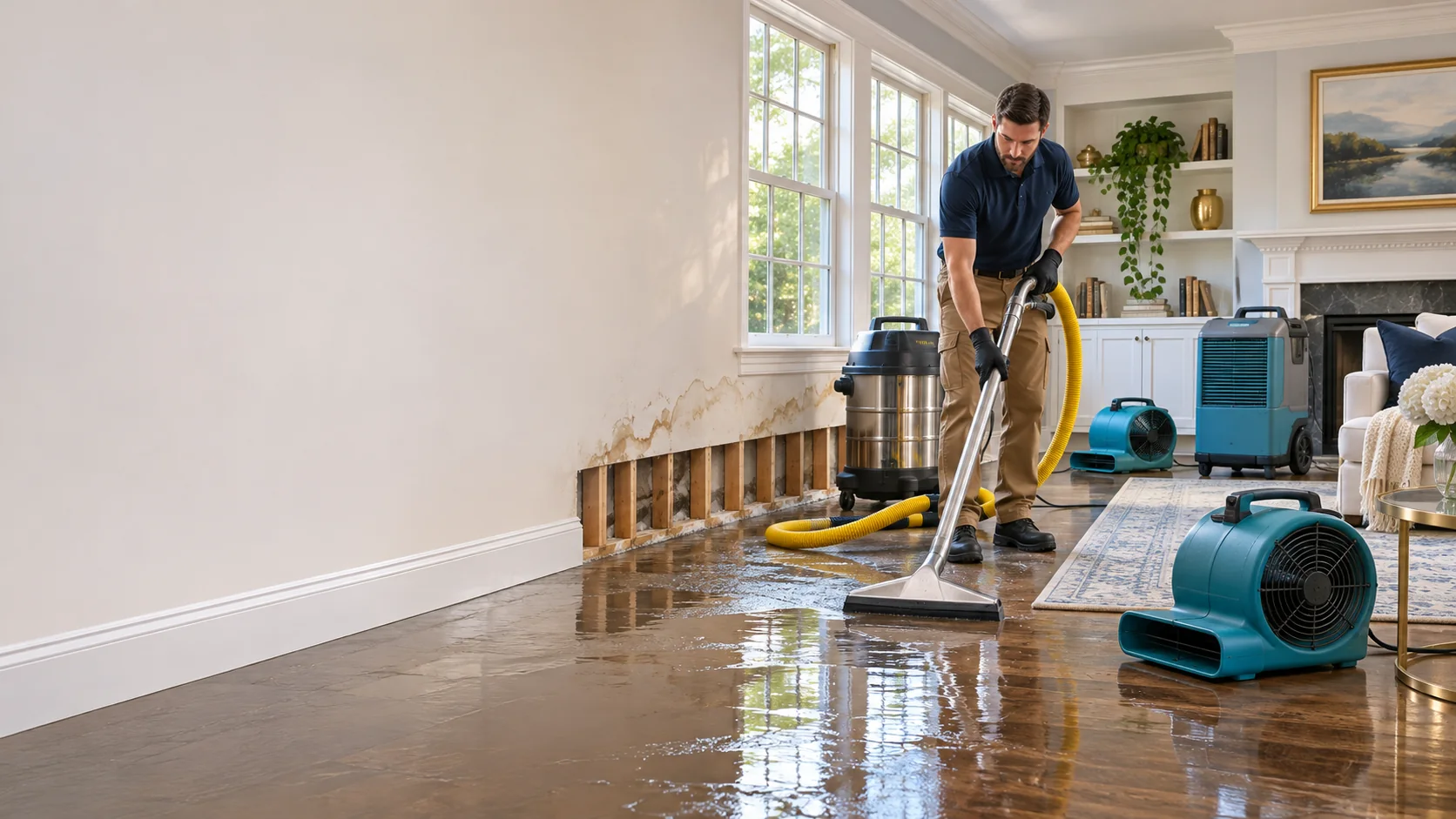
HOMEOWNER GUIDE · WATER REMOVAL & DRYING
Removing the water is only the beginning.
When a room floods, getting visible water off the floor matters. But removing standing water and restoring water-damaged materials are not the same job. Understanding the difference helps you ask better questions.
Home / Homeowner Guides
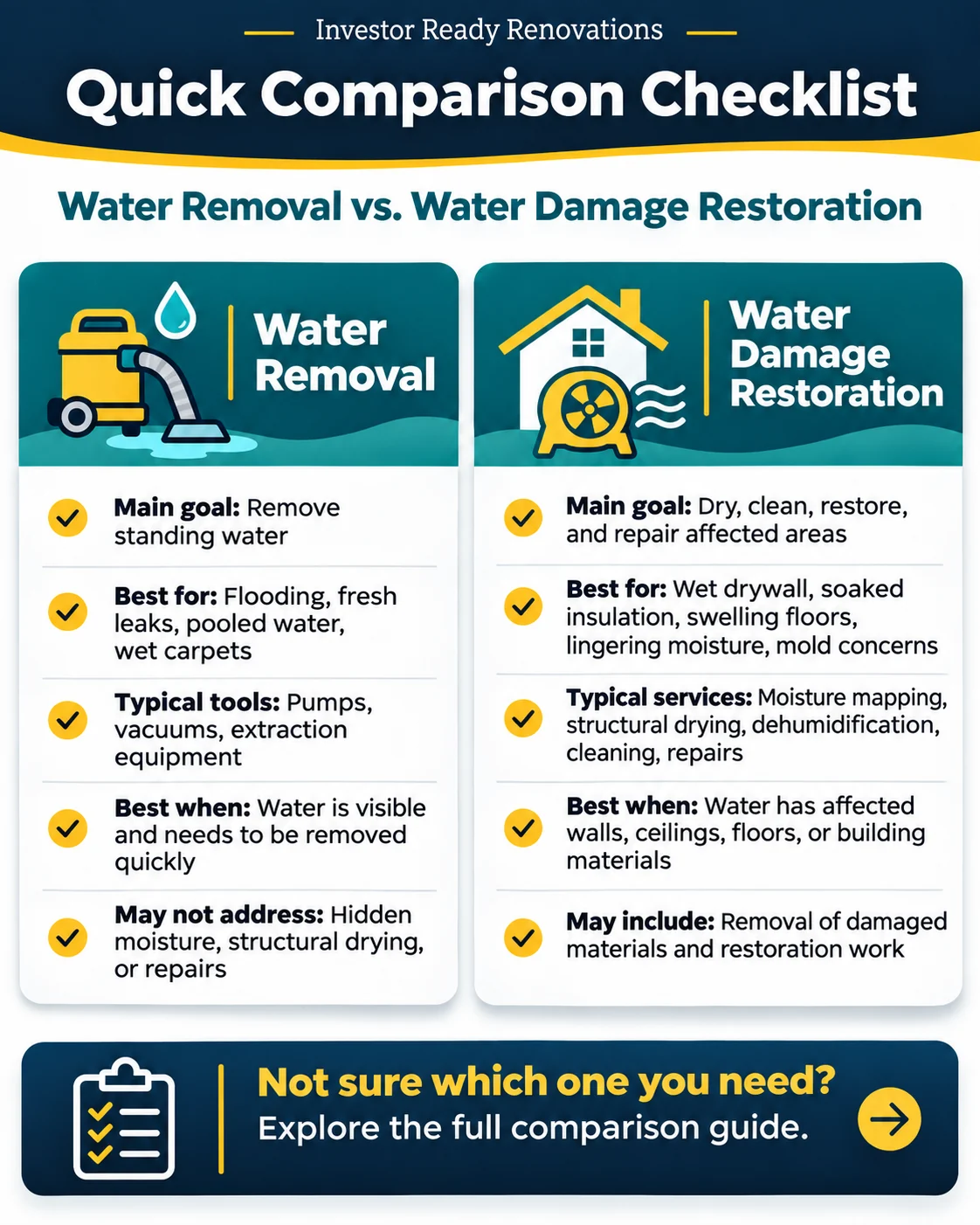
Water removal extracts standing or pooled water. Water damage restoration is broader: it may include assessing moisture, drying building materials, cleaning, removing unsalvageable materials, and repairs. Extracting visible water does not prove a floor, wall, or subfloor is dry.
Water Removal vs. Restoration Checklist
Save this practical checklist or open it at full size. Continue reading for the complete explanation and safety considerations.
What is water removal?
Water removal, sometimes called extraction, is the process of removing standing or pooled water. It may involve pumps, extraction machines, or other equipment appropriate to the situation.
Removing water promptly can limit further exposure of floors and belongings, but it does not by itself mean that walls, subfloors, insulation, or other building materials are dry.
What is structural drying?
Structural drying focuses on moisture left in affected materials after standing water has been removed. Depending on the situation, a provider may use dehumidifiers, air movement, moisture meters, and periodic monitoring.
The right method depends on the amount and source of water and on the materials involved. Never use electrical drying equipment in an area with unsafe electrical conditions, and avoid blowing air across suspected contamination until a qualified professional has evaluated it.
What does restoration include?
Water damage restoration is the broader process of assessing, cleaning, drying, and addressing materials damaged by water. Some situations require removing unsalvageable items or portions of building materials and later repairing or replacing them.
Restoration scope varies. A company that extracts water may not perform every repair, so ask exactly which services are included in the quote and who will perform each step.
Why does the water source matter?
Clean supply-line water, appliance discharge, sewage backups, and outdoor floodwater can pose different contamination concerns. The water source affects safety, cleaning methods, and whether materials can be kept.
If water may contain sewage or flood contaminants, do not treat it like a routine clean-water spill. The CDC and EPA recommend extra precautions during flood cleanup.
Questions to ask about the drying plan
- How will you identify and measure moisture in affected materials?
- What materials may need removal, and why?
- What drying equipment do you expect to use, and how will you confirm the area is dry?
- What is included in the written estimate and what is not?
- Will you document moisture measurements and the work performed?
When should you seek help?
Seek professional guidance if significant water is present, the affected area is difficult to dry, moisture may be behind walls or under flooring, water may be contaminated, or the structure is unsafe.
You can use our water-damage service page to explore the next step for checking availability in your area when phone connections are enabled.
Common homeowner questions
Is water extraction the same as water damage restoration?
No. Extraction removes pooled water, while restoration can involve moisture monitoring, drying, cleaning, removal of damaged material, and repairs.
How do professionals know a home is dry?
A provider may use moisture meters and repeated measurements to check affected materials. Ask how the drying goal will be determined and documented.
Do I need drying equipment after the water is gone?
Possibly. Moisture can remain beneath flooring and inside walls after standing water has been removed. The need for equipment depends on the water source, affected materials, and a professional assessment.