

HOMEOWNER GUIDE · CEILING LEAKS
Water leaking through the ceiling? Start here.
A ceiling leak is stressful, especially when you cannot tell where the water is coming from. These first steps help you protect yourself, preserve useful information, and decide what kind of help to seek.
Home / Homeowner Guides
If water is coming through your ceiling, avoid electrical hazards and any sagging areas, then stop the water source only if it is safe. Photograph the damage when safe and seek professional help if moisture may be trapped above the ceiling or the area cannot be dried promptly.
Ceiling Leak Action Checklist
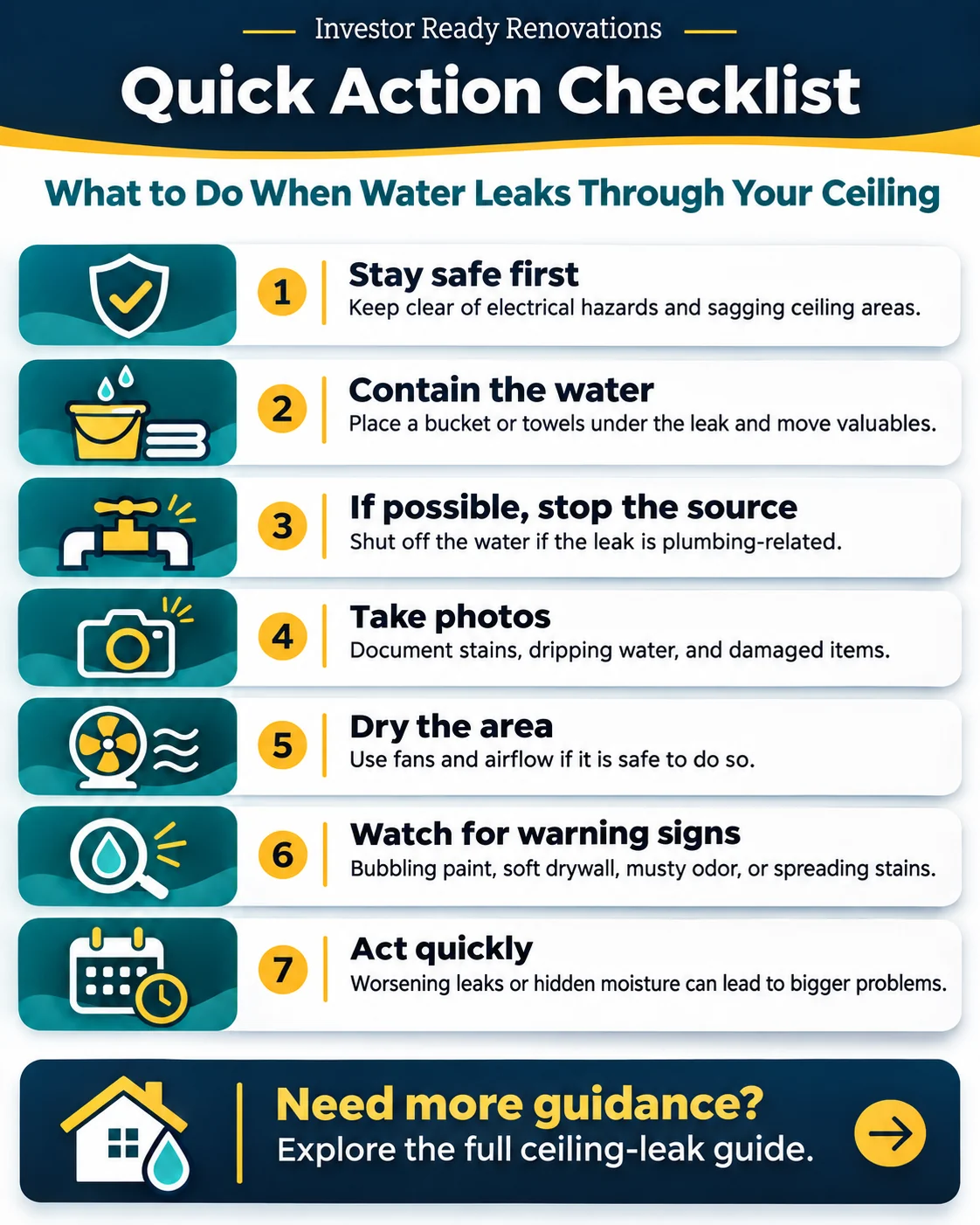
Save this practical checklist or open it at full size. Continue reading for the complete explanation and safety considerations.
1. Put safety ahead of the cleanup
Stay away from water near lights, outlets, wiring, or appliances. Do not touch switches, electrical devices, or a breaker panel while standing in water or when access is unsafe. If the ceiling is bulging, sagging, or beginning to break apart, stay out of the affected area.
If there is a serious electrical, structural, or other immediate danger, leave the area and contact the appropriate emergency service or qualified professional.
2. Stop the source only if it is safe
A ceiling leak may come from roof damage, plumbing above the ceiling, a bathroom overflow, or an appliance. If you can identify and safely shut off a supply valve, that may help limit further water intrusion. If the source is unclear or unsafe to access, do not attempt repairs yourself.
Water showing up in one room may have traveled from a different location. Keep notes about where and when you first noticed moisture, dripping, stains, or damaged finishes.
3. Document what you can see
When it is safe, take photos of the ceiling, walls, floors, and belongings affected by water. Record the date you discovered the damage and any known cause. Contact your insurer promptly if you intend to seek coverage, and ask about documentation and necessary steps before disposing of affected materials.
Do not delay urgent safety measures simply to take pictures. Insurance coverage depends on the policy, cause of loss, and claim details.
4. Understand that drying may go beyond the visible stain
A ceiling can appear only slightly discolored even when the drywall, insulation, or other materials contain moisture. A restoration professional may use moisture measurements, extraction, dehumidification, and targeted removal of materials that cannot be safely dried.
EPA guidance emphasizes prompt drying—ideally within 24–48 hours of a water incident when possible—to reduce the risk of mold growth. That window is not a guarantee that mold will or will not appear.
5. Know what to say when seeking help
- Where is the water entering or appearing? For example: kitchen ceiling, upstairs bathroom, or near a light fixture.
- When did the leak start or when was it discovered? Is it still active?
- Was the source clean plumbing water, an appliance, sewage, or outside floodwater? If uncertain, say so.
- Which rooms, floors, ceilings, and belongings appear affected?
- What is your ZIP code, and are there access or safety concerns?
When to seek a professional assessment
Seek professional help when water is widespread, materials remain damp, the ceiling is damaged, you suspect hidden moisture, the water may be contaminated, or the electrical or structural safety of the area is uncertain.
A qualified provider can explain the proposed work and how they will confirm that affected areas have dried. If you are unsure whom to contact first, review our water-damage service page for the available next step.
Common homeowner questions
Is a dripping ceiling dangerous?
It can be. Stay away from sagging ceiling materials, wet lights, outlets, and other electrical hazards. If the area may be unsafe, leave it and contact a qualified professional.
Should I paint over a water stain after the leak stops?
Not yet. A stain can hide moisture in drywall or insulation. Confirm that the water source is corrected and the affected materials are properly dried before cosmetic repairs.
Who should I contact about a ceiling leak?
The first professional depends on the source, such as plumbing or roofing. When the ceiling or room has suffered water damage, you may also need water removal, moisture assessment, drying, or restoration assistance.