

HOMEOWNER GUIDE · CHOOSING A PROVIDER
Ask better questions before you hire.
You should understand what a company plans to do, what it will cost, and how it will document the work. These questions help you compare restoration providers with confidence.
Home / Homeowner Guides
Before hiring a water damage restoration company, ask about its specific services, required licensing and insurance, how it checks hidden moisture, how drying progress is documented, and exactly what the written estimate includes. Confirm credentials and terms independently.
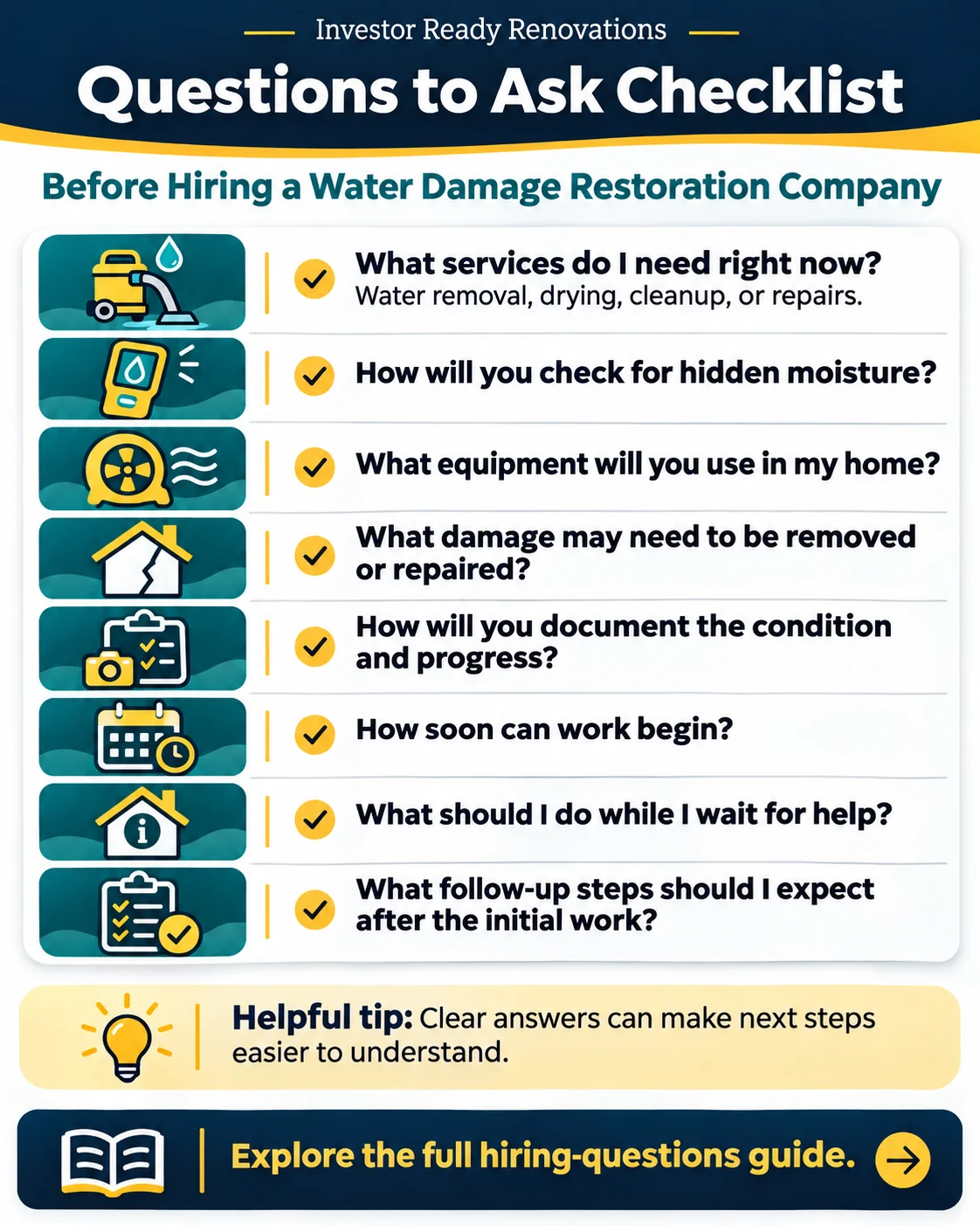
Questions to Ask Before Hiring Checklist
Save this practical checklist or open it at full size. Continue reading for the complete explanation and safety considerations.
1. What services do you actually provide?
Ask whether the company handles water extraction, moisture inspection, structural drying, mold-related remediation when needed, demolition of unsalvageable materials, and rebuilding. These may be separate services provided by different professionals.
A clear answer helps you understand what is included and whether you will need another contractor for repairs.
2. How will you find hidden moisture and confirm drying?
Ask what moisture-monitoring equipment will be used and whether readings will be documented throughout the job. Visible dryness is not the same as a documented drying assessment.
Find out what happens if areas behind walls or under flooring are still wet when the surface appears dry.
3. Are the required qualifications and insurance in place?
Verify any licenses that your state or locality requires for the type of work, as well as relevant insurance. Ask about experience with the particular water source and materials involved in your home.
Do not assume that appearing on any website or receiving a call means a provider’s qualifications have been independently verified.
4. What will the estimate and agreement include?
Request a written scope that distinguishes inspection, extraction, drying, cleaning, removal, repairs, equipment charges, and any additional fees. Ask how changes in scope are approved.
If you are making an insurance claim, contact your carrier about documentation and payment. A contractor cannot guarantee how your insurer will decide coverage.
5. Who will be in my home and what happens next?
Ask who will supervise the project, how often progress will be checked, what access to the home is required, and what documentation you will receive when the work ends.
For contaminated water or extensive mold, ask how the provider will prevent additional exposure to occupants and keep unaffected areas protected.
A quick comparison checklist
- Written scope and itemized estimate
- Required licensing and insurance verified independently
- Clear description of extraction and drying approach
- Plan for moisture measurements and documentation
- Timeline, access requirements, and contact person
- Agreement on changes, payment terms, and final documentation
Find the next step for your home
Once you know what to ask, review our water-damage service page for information about available types of assistance. When an approved call connection is active, you can use that page to check whether service is available in your ZIP code.
Common homeowner questions
What should a water damage restoration estimate include?
Ask for an itemized written scope covering inspection, water extraction, drying, cleaning, removal, repairs, equipment, and potential additional charges.
How can I check whether a restoration company is qualified?
Verify any licensing required in your state or locality and relevant insurance. Ask about experience with your specific water source, materials, and contamination concerns.
Should I ask for moisture readings?
Yes. Ask how affected materials will be assessed, how drying progress is documented, and what evidence the provider will provide at completion.